Showing posts with label auto-immune diseases. Show all posts

Tuesday, 28 August 2012

Pumping, Pilates and Pffffffffffffffffffffffffffffffft!

I am SO sorry for the long gap in bloggery since mid April. Some days earlier in the year, it was all I could do to read and retain the last few words in my brain-fogged brain, let alone write!

Thank you so much for sticking with me and continuing to follow.

I'm more touched and grateful than I can say for your interest and patience here.

As many of you know all too well, M.E. is a fluctuating illness.
One day, coping. Next day, crashed.
One day, doing to the point of overdo. Next day, unable to raise your head from the pillow.


Combined, in my case, with Type 1 diabetes, I find my blood sugar often acts as a thermometer of how M.E. is bamboozling my body. The past months have helped me put this in focus in several ways. Struggling, but learning every day, for which I'm profoundly thankful (when I'm not gritting my teeth and screaming hoarsely at the sheer frustration of functioning at less-than-optimal level so much of the time!)

My cardiac arrhythmia, uncovered at the end of last year, after several particularly severe hypoglycemic episodes, is now being tackled with a 2.5 mg daily dose of Bisoprolol. That doesn't mean it's been cured or fully controlled. I can go for longer symptom free at the moment, at least. Then other days, my heart is glugging and giggling through my ribs for no obvious reason. I'm learning to live with it, but don't enjoy the sensation! The cardiologist seemed quite open to the idea that this might be related to M.E./POTS/OI, but the GP seems now to be denying the ectopic beats the cardio clearly picked up and mentioned (but didn't write in my records, apparently!)

After 28 years of Type 1, my diabetes consultant asked if I had ever considered an insulin pump. Considered it? No way could I ever afford it, without the NHS. Only a tiny percentage of UK Type 1s are pumpers. Fewer than in the USA or mainland Europe. Having tried everything to achieve good control, my glucose levels still plummet to dangerous low levels or soar to ludicrous highs with no apparent provocation. Although I'd always been less than enamoured by the idea of being attached to a pump 24/7, I finally jumped at the chance to try it. I haven't regretted it for a second in this first two months of pumping. Nothing ventured, nothing gained, in my book.

Humphrey Pump-hrey - the new "man" in my life!


The insulin pump has helped me to see exactly how things affect my sugar levels. The pump releases minute personalised amounts of basal insulin (as little as .1 unit divided into 20 doses every three minutes over an hour day and night) and exact bolus amounts to suit carbohydrate intake through the day. As I'm learning to tweak these amounts to suit my lifestyle, I've very quickly seen the truth. My control can be near perfect and exact, until I do something overtaxingly aerobic, or requiring lots of brainwork, or physical effort. Then, up to 12 hours or a day or so later, my blood glucose will rise as much as 9-10 mm/ol in a matter of a couple of hours. It can go from mid-range of normal (6) to dangerously hypoglycemic (16) with no carbohydrate consumed or other factors present. Equally it will sometimes stay impossibly low (1.9-2.8) without provocation and unresponsive to dextrose, sugar or jelly babies galore. M.E. raising it's ugly head.

...and introducing Rita the Glucometer Maid. Acts as insulin pump hand set, via bluetooth and  as an inveterate nag when glucose low or high!


Because of being able to keep an even closer eye on insulin effect, carbohydrate effects and glucose profiles, I can appreciate the real effect of exercise. My daily results show clearly the way physical and mental effort and subsequent exhaustion is expressed by my immune system etc pushing up my sugar levels (instead of dropping them, as exercise should in a normal body). Although this can be erratic, I hope bit by bit to be able to learn to tackle these effects in order to maintain better control than ever. Perhaps along the way, I can help professional health workers to understand more of the realities of M.E. and its effects on other conditions like Type 1 Diabetes. After all, Type 1 is another autoimmune disease, and autoimmune diseases often flock together like birds of a feather.

No - can't manage much but simple balancing & stretching yet!


More recently, quite by accident, I heard about a very local, very gentle over-50s Pilates group led by a lass who has had an M.E.-like illness herself, and is currently in remission. I went to the first session purely to give moral support to my cousin who wanted to give it a whirl. Because the instructress is so aware of my limitations (and those of others in the class with conditions ranging from  fibromyalgia, multiple chemical sensitivity, IBS, and arthritis to rheumatism) I have been able to continue with the classes on my better days.

 Sometimes I try to push on beyond my limits. I push MYSELF that is. She doesn't push me! I pay for it, of course. The instructor gently reminds me that pushing myself is not the right thing to do. She often steps in subtly and discreetly to make things more achievable when she notices me, or anyone, struggling. She always encourages me to rest and do less, not more! Slowly, I'm learning to pace myself in this. There are many times in the year I would not even be well enough to get there, let alone participate at any level. But I am trying, in these warmer summer days, and I am glad of it. My blood sugars don't protest and they remain level when I keep within my own very strict limitations.

I've found that my diabetic control doesn't suffer so much with this controlled, non-aerobic exercise. But two minutes of gardening, concentrating to read, carrying shopping or even the short journey down to the class can have a far worse effect, catapulting me into ketone-high hyperglycemia territory and leaving me wrecked for days.



That sums up where I am at the moment, then: Pumping, Pilates and (very often) Pffffffffffffft! Totally zonked.
But I'm just thankful to do what little I can, whenever I can, if I can, while I can.

If you have days when you feel you can do more, why not give yourself a big hug and allow yourself to feel thankful, exhilarated and proud of what you CAN achieve in spite of this flipping illness?

But when you have days, like I do, when nothing seems to be achieved, when it's one step forward and umpteen steps back, please don't beat yourself up. Don't be hard on yourself.
IT'S NOT YOUR FAULT!
My blood sugars show none of this is in my head. None of this is down to bad attitude, faulty illness beliefs, laziness, choice or weakness.
It's not in your head either.
Find what helps you to thrive and enjoy whatever part of it you can.
Don't let the nay-sayers win by dragging you down.
We have M.E. and often other disabling illnesses too trying to poop on our dreams. But M.E. can never have us. M.E. can never define us or limit who we are. Not now and not ever!


Sunday, 23 October 2011

Who's sorry now? Norway first to apologise to M.E. patients


 Keep your words soft and tender because tomorrow you may have to eat them.  ~Author Unknown

Norway's Directorate of Health Apologises for Treatment of ME Patients


News item so moving it got me choked up with thankfulness! Me and all M.E. patients alike, I guess.

Thank God  for the Norwegian Directorate of Health's compassion, wisdom, humility and determination to change, clearly coming through in this unprecedented statement:


"I think that we have not cared for people with ME to a great enough extent. I think it is correct to say that we have not established proper health care services for these people, and I regret that." -Bjørn Guldvog, Deputy Director General of the Norwegian Directorate of Health

Here in the UK, we've grown accustomed to government ministers who seem to have their faces set against ever saying sorry. Many seem to see apology as a sign of weakness. 

Today this is surely a welcome sign of true strength. The grace to listen to solid research, learn from new insights and the wisdom to embrace these and move forward, is overdue and so welcome now.
I so hope that every Health Authority and government across the world can listen, learn and follow suit.

Now there is no longer any excuse to lock up our fellow M.E. patients in mental institutions, or detain them on psychiatric wards for imaginary conditions that, as we ourselves always knew, they never had. Some are still there, and this must urgently be addressed across the world.

Thank you, the Norwegian scientists behind the Rituximab study that shows M.E. to be an illness involving an immune response.

Thank you to the Norwegian Health authorities who have embraced this, taking the path less travelled, to bring justice and hope to one of the most denied, mocked, misunderstood and devastating diseases of modern times.


‘Cancer drug may also treat Chronic Fatigue Syndrome’, WebMD Health News, 19 October 2011
 
When the news first broke, as it came so hot on the heels of the XMRV disappointments, we wondered what to think. 


I read the research the first day news broke, summarised on the M.E. Association's link above. I joked on Twitter that I hoped the ignorant cynics in the media would not read "somatic" as "psychosomatic"! Even though "autoimmune"/"immune system" are clearly spelled out in the next sentence, we've all experienced hack journalism only too eager to call black white when talking down M.E. and tugging its forelock to the popular psychological school of naysayers.

The two doctors say the results indicate that CFS is in fact a somatic decease. "We think that CFS is an autoimmune decease. The immune system has a central role in this," they say to TV 2 News.  
(sic. 'decease' in the article - should be 'disease' of course.)


With today's news of apologies to M.E. patients and the turning of the tide a little further towards full recognition, care and treatment for our illness, I'm hopeful that those who snicker about it being "all in the mind" will quickly go the way of the Tyrannosaurus, or better still, to be seen as the mythical dragons they really are. Monsters we don't need to be afraid of any more.

Monday, 25 July 2011

Gardener's Whirled


Four facts led to me being crashed today
(Four facts that show why pacing is such a challenge!): 

1. This weekend was one of the sunniest of the summer so far.

2. Mum comes to stay at weekends when she's free, to take a bit of the strain by helping with things like shopping or odd jobs around the house and garden that I can manage with a bit of help on a good day.


3. My neighbour was away for the weekend. Meaning I could stumble around her garden grunting, groaning and intermittently slumping with pain and weakness without being overlooked or causing concern.

4. I was ambulant with mild to medium M.E. distress that day after a relatively rested-up week.


These four circumstances meant I felt I had to take advantage of the opportunity to tackle a job I didn't even manage at all the last couple of years. Cutting back the lilac tree with the extended loppers.


It's a job which, pre-M.E. collapse, or in a period of remission, I would attack with relish and pursue till the tree was clipped back to within an inch of its life!


This weekend, picture the sun shining, my tiny Mum holding the little step stool that gave me the extra inches height needed. Thus I could theoretically reach the upper branches, Mum cheering me on,  holding things when my arms and legs gave out, fetching and carrying to save me vital atoms of energy along the way.

As they often appear to, when strength is lacking, things contrived to hamper the process. An illusion, but no consolation when you're wheezing, trembling and dizzy with effort and your calf muscles are jerking like a weasel in a wind tunnel!


The long string with a toggle on the end like the toggle on a duffle coat from the 1970s, that runs the length of the extendable lopper  handle, managed at a crucial moment to hook itself high in a cleft branch. Of course it did! Things had been almost finished enough to allow me to lie down and try to recover!


What little strength and coordination I had left in me was rapidly frittered away in futile attempts to retrieve the rope from the upper twigs with various articles: my walking stick, the pole on which the clipper head is mounted, the Y-shaped stick used for hiking through the countryside that I bought at a country fayre when I still enjoyed the prospect of using it on rough roads!


Eventually with the last iota of ingenuity and brute force in my defiant, stubborn body, I half dragged, half willed away the recalcitrant twiglet holding the rope aloft, and the whole thing fell back towards earth to a place I could reach.


I finished the job. Or it finished me. It was a fine line dividing victor from vanquished.


Shattered, I was pathetically pleased with myself. The lopped limbs of the lilac were like battle spoils or captured chess pieces.

Lilac tree-  0. Me even with M.E.- 1! 


The coffee Mum made me when I was finally able to stagger, half blind with hypoglycaemia, nauseous and shivering with exhaustion to a more horizontal position, was sweet indeed, not with sugar but satisfaction.


I haven't recovered yet. Not anywhere near. To be honest, today I can hardly string a sentence together without mistaken words or forgotten threads. When I can sit to type, everything has to be checked and rechecked and squeezed out reluctantly from my crashed brain. I woke constantly in the night with twitching limbs on fire, rolling around on the familiar burning bundle of my own internal organs, as it seems. My ears are ringing, nausea stalks me, my eyes feel blow-torched. 


But this debilitating cocky disease will NEVER keep me down.


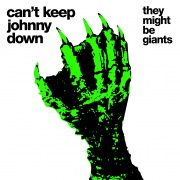
They Might Be Giants' new album 'Join Us' came out this week. I have had it on almost back-to-back continuous play since its release, when as a member of their first "Instant Fan Club" the band sent it to my inbox as an mp3 download last Monday. This and the grin-inducing privilege of seeing my my name among the other 1000 lucky fans in the digital artwork!

The opening track is the whimsical, mock-defiant "Can't Keep Johnny Down". I sang along with such relish that time, fresh from my wrestling match and ten rounds with the lilac. Singing like a madwoman, beaming and thankful even though my neck glands were already feeling swollen and stiff with pain from my efforts and my hands shook imperceptibly guiding the cup to my lips in between phrases.


M.E. often appears to submerge my best efforts, my rallies, my recoveries under a tide of payback as it temporarily sucks me under the quicksands of neurological meltdown.

Maybe I was extra blessed that my old neighbour was away as I sang with all the strength I could still muster:

And they can't can't keep Johnny down!
They haven't yet built the man that'll keep old Johnny down
And they don't don't know what I've seen
Thay can't know what's in here and they can't keep Johnny down! (c) TMBG

For me, M.E. keeps trying and periodically getting the upper hand. But it can't crush my spirit and it never, ever will!

Friday, 15 July 2011

"30 Things About My Chronic Illness" Meme


National Chronic Illness Awareness Week (Sep 12-18th 2011) is a little way off, yet. But on their website:


Invisibleillnessweek.com "30 things meme"


they suggest a great idea for sharing what living with an invisible chronic illness really means.


My immediate reaction was Number One: I REFUSE TO BE DEFINED BY ILLNESS. WHO HAS EVER HEARD ME WHINE? I AM ME!


But it's important for all society to learn more about coping with invisible chronic illnesses. 

Important for those who are ill.

Important for their acquaintances who are luxuriously smug now that they'll never develop an invisible but very real illness themselves.


Important for their families.


Important for their loved ones.


Important for their employers and colleagues.


Important for their doctors and consultants.

Important for decision makers and politicians.

Important for everybody in this wonderful, challenging world.


So here's my contribution to the meme project this year.


This is what it's important to know if you care about me.
If not, please look away and enjoy your day!

The words in heavy type below are the 30 things suggested by the Invisible Illness site.
The italics are wholly my own.


Please feel free to comment or contact me, or even better, visit the Invisible Illness Week website here

Invisible Illness Awareness website link 

and spread the word, share your own story!


30 Things About My Invisible Illness You May Not Know

1. The illness I live with is: Myalgic Encephalomyelitis complicated by Type 1 Diabetes with little warning of hypoglycaemia.

2. I was diagnosed with it in the year:
M.E. (diagnosed 2006); Type 1 Diabetes (diagnosed 1984).


3. But I had symptoms since: M.E. - about 1992 when I was laid low with giardia and amoebic dysentery while working in Bolivia, South America. 3 bouts of shingles in my head (Easter 2000, 2004, 2008) are also thought to have had roots in the M.E. I collapsed on 24th October 2005 after my annual flu jab recommended for diabetics. It usually made me ill each year, though never so badly as 2005. I think my diabetes began about the time I began university in 1980, but the doctors (when I was driven to attend!) always vaguely put my thirst and weight loss etc down to "stress" and "my age" (early 20s????) until I walked into my GP's office in sheer desperation in July 1984 with a urine sample and a request to be tested for diabetes after the penny began to drop. I was hospitalised with BG in the 30s the same afternoon. *rolls eyes*
 
4. The biggest adjustment I’ve had to make is:
going from being a busy, popular, in-demand member of society known for my sunny optimism, hard working, innovative, lively nature and compassion, to somehow ending up classed in the same boat as benefit scrounging scum and spoken of as if I wasn't still here inside. My beloved two mountains bikes rusting in the shed. No longer being able to pass everyone in the street as they laugh and say "Are you in a rush?" and having to pace myself when real life just doesn't work like that!

 
5. Most people assume:
that it's all about some vague "tiredness" or "fatigue" we all get after effort, and not a bone-crushing, disabling multi-system sickness that knocks the legs from under you and affects every part of you, brain and body, digestion, thought and strength/co-ordination. They assume when they actually see you on a better day, because you might actually be out of bed/the house, you must therefore be 100% well!


6. The hardest part about mornings are:
hearing the post drop on the mat and dreading what new bill or humiliating DWP form it may bring. Not having slept well at night means I  no longer wake at the crack of dawn raring to go. Well, I'm still raring to go, but my body says "no"!

 
7. My favorite medical TV show is:
nothing that mentions M.E. as I dread the old myths and lies being peddled yet again. Probably "Embarrassing Bodies" on Channel 4.

 
8. A gadget I couldn’t live without is:
My laptop, keeping me in touch with friends, colleagues, campaigning, shopping etc when my illness scuppers going out to maintain such links with my real life. Or my walking stick, when the ground appears to turn to rubber like the cake-walk from hell!


9. The hardest part about nights are:
Every sleepless second spent lying on the invisible burning mat of feverish pain and muscle spasms.

 
10. Each day I take
loads of pills & vitamins. For Diabetes: short acting and long acting insulins 5 times a day, metformin (trialled with type 2s but also useful in insulin resistance after years of type 1), statins for cholesterol (side effects possibly because their leeching effect on M.E.'s depleted source of Co Enzyme Q10 made me have to discontinue/change these recently), ACE inhibitors for high blood pressure. 

For M.E.? Having tried low-dose amytriptilene and melatonin (bought not prescribed!) in early days, now just painkillers/anti-inflammatories (ie aspirin, ibuprofen and paracetamol) which have little or no effect anyway!
 
11. Regarding alternative treatments I:
have tried quite a few for myself over the years and have resisted the patronising and impractical suggestions of psychological "therapies" read about in newspapers by well-meaning friends of friends, because those same articles they read are still in the dark ages about M.E. as a physical, neurological, multi-systemic illness and not some form of idleness and/or depression. Why do they not remember how unlikely it is I'm depressed?


12. If I had to choose between an invisible illness or visible I would choose:
visible. Any day of any week.

 
13. Regarding working and career:
I have gone from virtually being on call 24/7 to being forced into early retirement from my beloved ministry. Voluntarily preaching for an hour a month now often leaves me crashed and unable to function  properly for days or weeks afterwards. I long for the day my health may be reliable enough to resume work in some form, but at my age and with my history, the flexibility needed to enable this still seems a distant prospect.

 
14. People would be surprised to know:
I'm still exactly the same person they used to know, just sicker, and I despise the way they see me now.

 
15. The hardest thing to accept about my new reality has been:
the way the media, medics and society in general treats me just because I have been stupid and awkward enough to have developed M.E. on top of my diabetes. Greedy cow! What was I thinking?

 
16. Something I never thought I could do with my illness that I did was:
Become bolshy enough not to apologise for it, and channel that controlled  frustration and rage into helping others raise awareness.

 
17. The commercials about my illness:
What commercials?

 
18. Something I really miss doing since I was diagnosed is:
Cycling. Walking for miles and miles. Playing (ie lifting) my accordion and singing without huge payback.

 
19. It was really hard to have to give up:
Independence.

 
20. A new hobby I have taken up since my diagnosis is:
digiscoping (birds in the back garden with a camera through a spotting scope).

 
21. If I could have one day of feeling normal again I would: 
thank God and go on raising awareness to help others not so blessed. Run to the edge of a cliff in Flamborough and stand laughing into the wind blowing in from the ocean.

 
22. My illness has taught me:
what a difference a day makes. Laughter definitely IS the best medicine.

 
23. Want to know a secret? One thing people say that gets under my skin is:
"Glad to see you looking so well!" (though better than looking like a miserable whining git, I reckon!)


24. But I love it when people: Genuinely want to educate themselves about invisible illness and show sensitivity and compassion. Like them, I never thought it would happen to me.


 25. My favorite motto, scripture, quote that gets me through tough times is: Lyric:"There's only one thing that I know how to do well
And I've often been told that you only can do
What you know how to do well
And that's be you,
Be what you're like,
Be like yourself,
And so I'm having a wonderful time
But I'd rather be whistling in the dark" (They Might Be Giants, "Whistling in the Dark" from 'Flood'). 


Scripture:1 Peter 3:15: "But in your hearts set apart Christ as Lord. Always be prepared to give an answer to everyone who asks the reason for the hope that you have. But do this with gentleness and respect."

Invisible illness related: "No, I don't look sick. You don't look stupid, either." 
 
26. When someone is diagnosed I’d like to tell them:
You're not alone. Be gentle with yourself. Don't let anybody or anything crush your joy. Sense of humour and love is the greatest gift you could be given.

 
27. Something that has surprised me about living with an illness is:
The depth of people's wilful ignorance and casual cruelty.

 
28. The nicest thing someone did for me when I wasn’t feeling well was:
Fetched a prescription for my mother out of normal hours, knowing without needing me to ask that I couldn't fetch it myself.

 
29. I’m involved with Invisible Illness Week because:
I want to change the world for others struggling with misunderstanding and ignorance, to make a better life for everyone in this position, as I would have wanted to do before I was affected myself, and would want to still when I am well again.

 
30. The fact that you read this list makes me feel:
Blessed. Blessed you bothered to stop by and try to understand. Please don't waste the opportunity to grow and learn from this. Thank you!