
If a new EU directive comes into place, insulin dependent diabetics may no longer be considered fit to drive. The proposed changes are due to take effect in October.
Up to 1 million people could lose their licences.
The ruling has already been called "harsh" and "unnecessarily strict".
This is one battle I won't be fighting.
But I do understand why others might feel they must.
I have many friends, with and without insulin-dependent Diabetes, Myalgic Encephalomyelitis or any other chronic illness, who swear to me on a regular basis that they could not possibly live even a day without using their car. Transporting the family. Carrying the weekly shop. Commuting to work. Living in isolated spots.
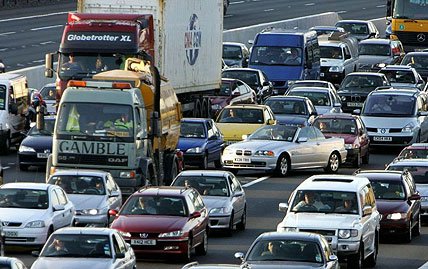
The implication is almost always, that I am some kind of slightly antiquated, pitiable freak for choosing NOT to drive.
"Yes, but if you were me..." they trail off, with a shake of their heads.
The ones who take this attitude will also refer to a bike as a "push-bike" showing their distaste for the concept of applying their buttocks to the saddle in anything more than a very occasional recreational capacity.
They are the people most likely, when I say I don't drive, to say, "You ought to get yourself a little car."
Spot the patronising "little" there? I then realise I've played into their hands by saying "I don't drive" as though it was some kind of defect or lack in my personal qualities. When I can remember, I try to say "I travel by..." adding in "foot", "bike", "public transport" etc as appropriate. But I don't usually bother, because inveterate drivers, in my own experience, are unlikely to accept that it's a happy, fully informed, free choice I make.
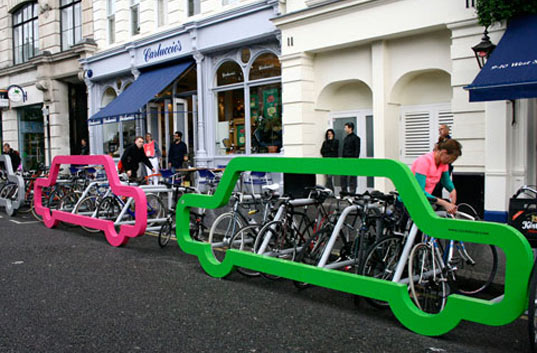
Free choice. I understand people's reasons for always having to drive everywhere. I've heard them often enough over half a century, as it's to elective pedestrians like me they spend most time justifying their reasons. Among other drivers, why would they need to explain? The freedom to gridlock rules supreme.
Since I was first diagnosed with Type 1 Diabetes at the age of 23, I have never had proper early warning signs of a hypoglycaemic attack. 27 years of medical efforts to "regain" these symptoms, which I didn't have from Day 1, have all failed miserably. I still, as ever, get down to 1.9 mmol/L (or if you're used to mg/dl about 34) before I can be pretty certain I'm getting low.

By then I have shimmering clouds of iridescent light in my central field of vision. The other behavioural symptoms that begin to manifest when my BG is that low, or before, render me, of course, stubbornly resistant to recognising any problem. Are you reasonable or rational when you're drunk? Or when your body's conserving every last scintilla of strength by shutting down bits of your brain? Exactly.
My diabetic control is good. On paper. My last two HbA1c's were just over 6%. My eating is regular. My self-tests of BG are frequent. Still, the erratic nature of the illness, affected by so many other factors going on inside and outside my living body, make my decision not to drive seem nothing but wisdom and a gift to the rest of humanity to me. I know this is not a crowd-pleasing opinion, but it's sincere.
Since M.E. took hold more recently, my strength, my co-ordination, my vision, my ability to concentrate on doing two things at once, let alone the complex web of reactions and decision-taking involved in driving, is not what I would hope was going on in the body of anybody else navigating today's busy roads, where children, animals or other adults are at their mercy and in their power to kill or maim.

M.E., rather than diabetes, has robbed me, for the time being, of the ability not only to contemplate driving, but also of walking comfortably without pain and subsequent exhaustion. My beloved mountain bikes lie with flat tires, wreathed in cobwebs since my collapse. Buses are nauseating, juddering torture chambers now intent on shaking me to a quivering pulp. I'm rarely well enough, or rich enough for rail travel these days, either! Cars have the same effect, of course!
 |
| Miss you guys! |
Friends of mine whom I love dearly drive as insulin-dependent diabetics and sufferers from M.E. Many do so with no reported disadvantage to them or, I trust, to other road and pavement users. I have much anecdotal and personally witnessed examples of when insulin-dependent diabetes and M.E. supposedly in remission have helped to place others in life-threateningly dangerous situations on the road. People on the sidewalks and the hard shoulder, other road users and their own passengers have had narrow escapes indeed. Some have not been so lucky, or had the luxury (when did driving stop being a responsible privilege and become an inalienable right?) of continuing to drive.
I completely understand why many will be enraged at any suggestion that the EU can issue a one-size-fits-all law that insulin-dependent diabetics have their driving licenses revoked. One-size fits-all is rarely a good idea, and I, too, bridle in principle at one group being dictated to what it can and cannot do because of a random label. But diabetes is no random label. Neither is M.E. They are both very real, unpredictable, fluctuating illnesses.
It's a double-edged sword in my life that I can always see and often empathise with all points of view and shades of opinion. Some argue forcefully that night hypos don't somehow count, as they're not driving when they're asleep.What if they had to rush someone to hospital in an emergency in the wee small hours that left little time for precautions? I don't have the answers.

I am just explaining, for the record, much as I would defend vigorously others' rights and responsibilities who hold a differing opinion, why I personally cannot fight this particular battle without being hypocritical, if it should arise.
I don't drive. Not for health reasons alone. If I had a new pancreas and a cure for the myalgic encephalomyelitis tomorrow, I still wouldn't rush to get behind the wheel. I believe passionately that the planet is better served by my treading lightly on it and leaving it as I found it, as far as humanly possible.
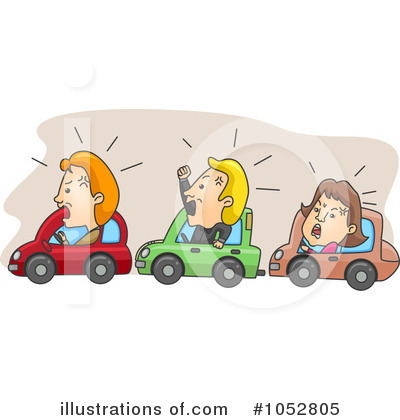
To those who say "but public transport is terrible" "public transport doesn't cover A or B area" "public transport is far too expensive," I say this. Public transport never will be forced into being efficient, reliable, well-funded, cheap and convenient until enough people demand they need it. It will never happen unless enough of us give up our "standing army" of private vehicles to make way for public transport to be truly for the public.
Born a railway child, I've depended on it and mostly delighted in it all my life. Walking is beautiful and cycling is one of the biggest delights in my life. One I long to return to when and if M.E. no longer has me so grounded as I am now.
No, carting heavy shopping and books/teaching resources to work on my back in a huge strong bag, on and off buses, in and out of panniers, was no sinecure. Not when my workplace was an hour's walk away and the shops on the way home were half an hour in another direction. There and back. A boot/trunk might stop me having to see, smell or interact with my fellow humans quite so often as I do. But that's my human choice.
The directive from Brussels is, as yet, a rumoured proposition. I personally doubt it would make it past the firewall of indignant opposition it would certainly face, not least because so few members of parliament, so few of us anywhere, embrace a life without the car.
But I can still dream, and so can you!

